The provisional findings of Niger’s Court of Accounts on the management of the state water utility, la Nigérienne des Eaux (NDE), have ignited a fierce public debate. Between alarming bacteriological contamination, shortages of treatment products, suspicions of corruption in the awarding of public contracts, and management privileges, the report lays bare the fragility of a company responsible for supplying drinking water to millions. As the country grapples with the fallout, questions are mounting over the future of water safety and the urgent need for reform.
A bacteriological alert that raises questions
The provisional audit, covering the 2023 and 2024 financial years, reveals that bacteriological analyses conducted in several regional centres found levels of contamination far exceeding the recommendations of the World Health Organization (WHO). While the international standard requires a total absence of germs (0 CFU/100 ml), the samples showed alarming bacterial presence:
- Doutchi: 50,100 CFU / 100 ml
- Maradi: 30,200 CFU / 100 ml
- Filingué: 17,120 CFU / 100 ml
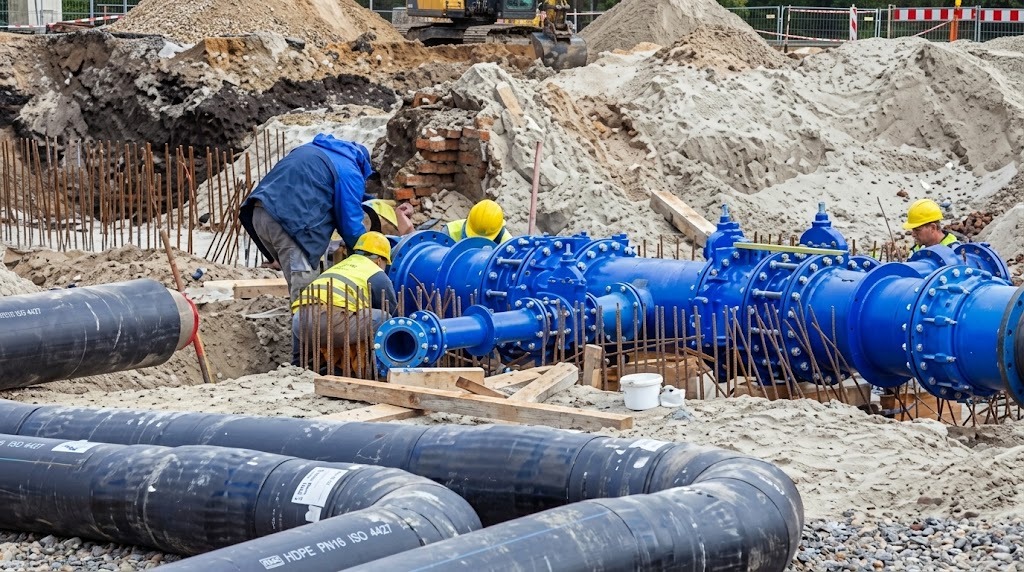
This deterioration in water quality is largely attributed to the dilapidated state of the 6,957-kilometre distribution network, which suffers between 20,000 and 40,000 leaks each year. These pipe ruptures allow wastewater to infiltrate and cause pressure drops. At the same time, chlorine dosing—a critical step in disinfection—fluctuates erratically, ranging from under-dosing in Tillabéri and Dosso to over-dosing in Niamey.
The situation is made worse by recurrent stock shortages of treatment products, particularly calcium hypochlorite, and the use of expired reagents in control laboratories. As a result, the utility is unable to certify the potability of the water it distributes.
Financial fallout: lost water and failed contracts
On the financial front, non-revenue water losses are estimated at 17.9 million cubic metres per year, representing a direct shortfall of around 5.3 billion CFA francs for state coffers.
These structural losses are compounded by the poor execution of key public contracts:
- The network equipment contract (DAO No. 001/2025): Awarded in late 2025 to the company Nascom for 950 million CFA francs including tax, the main lot for the supply of connection equipment is significantly delayed. Despite an advance payment of about 250 million CFA francs, the goods remain stuck at the manufacturer in Tunisia, freezing new customer connections.
- The renewal of treatment products (DAO No. 009/2026): An open tender was launched in September 2026 by NDE’s general management for the urgent supply of calcium hypochlorite, underscoring the imminent need to secure water treatment plants.
Governance under fire: internal criticism mounts
The document also highlights weaknesses in NDE’s internal control and human resource management. Unilateral spending authorisations, accelerated promotions that bypass usual seniority rules, and the absence of certified training programmes for network technicians are undermining the company’s technical expertise.
As the right of reply and the adversarial phase of the Court of Accounts report continue, these revelations underscore the urgent need for deep structural reforms within la Nigérienne des Eaux. The debate now centres on how to guarantee the continuity of public service and the health security of the population.